
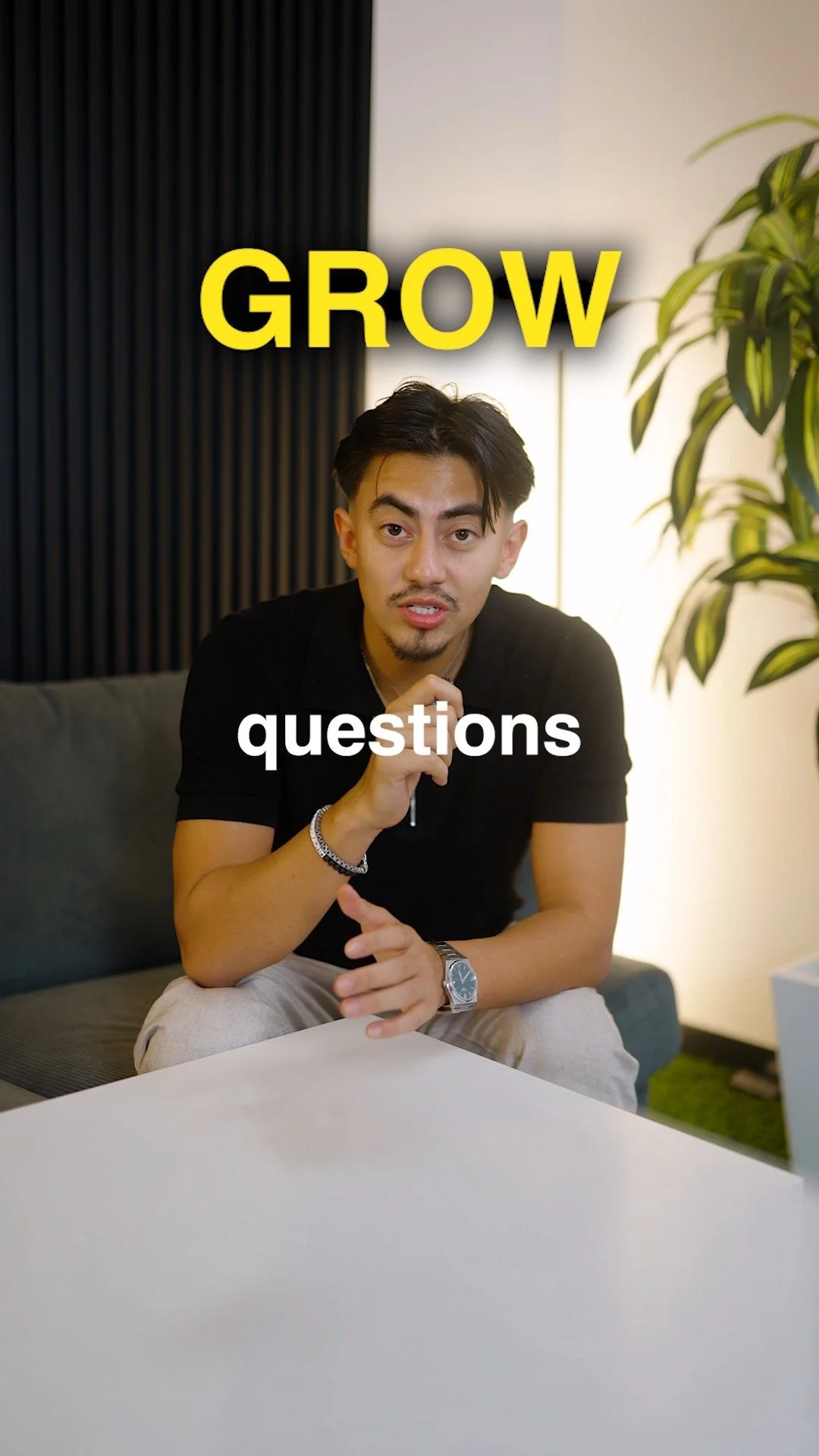
How Video Marketing Builds Trust Before a Customer Requests an Estimate
Learn how strategic video helps Miami service businesses reduce customer uncertainty, demonstrate their process, and build trust before a prospect requests an estimate.
When a homeowner or property manager needs a roofer, remodeler, plumber, HVAC company, electrician, realtor, or another service professional, the decision rarely begins with a perfectly organized comparison. It begins with uncertainty.
Can this company handle the job? Will the team communicate clearly? Does the work match the price? Will someone actually show up when promised?
For Miami and South Florida service businesses, video marketing can answer those questions before the first phone call. The goal is not to become an influencer or chase millions of views. It is to help the right local customer see how your business works, recognize your standards, and feel more comfortable requesting an estimate.
Why trust matters before the estimate
A service customer often has to make a decision before they can personally verify the result. They cannot inspect a roof repair that has not happened, experience a remodeling process that has not started, or know how an agent will handle a negotiation before hiring them.
That creates a trust gap. The customer has a problem, but the business is still unfamiliar.
A professional website, accurate information, strong reviews, and referrals all help close that gap. Video adds something different: visible evidence. It lets a prospect see the owner, the team, the job site, the process, and the finished work in context.
Google encourages businesses to add real photos and videos of their locations, products, and services because visual information helps customers learn about a business. Its guidance also recommends that images be clear, well lit, and representative of reality. That same principle should guide the content you publish everywhere else: show the real business clearly.
What customers are trying to learn from your videos
A potential customer is not only evaluating the technical service. They are looking for signals that reduce risk. Effective service-business videos answer practical questions such as:
Who will arrive at my home, property, or business?
Does this company regularly handle projects like mine?
What does its process look like?
How does the team protect the property and keep the site organized?
Will the company explain problems honestly?
What quality standards guide the work?
What happens after I request an estimate?
The best content does not simply say, “We are trustworthy.” It gives the viewer enough proof to reach that conclusion.
Five types of video that build trust
1. Show the work in progress
Finished-project footage is valuable, but the process is often more persuasive. Show preparation, measurements, materials, safety steps, protection of the customer’s property, cleanup, and quality checks.
A remodeler might explain why a surface is being prepared a certain way. An HVAC contractor might show what is inspected before recommending a replacement. A real-estate professional might explain how a property is prepared before a listing goes live.
These details demonstrate competence without relying on exaggerated claims.
2. Answer one buying question at a time
Customers repeatedly ask the same questions. Turn each one into a focused video:
How long does this type of project usually take?
What affects the price?
Do I need a permit?
Should this be repaired or replaced?
What should I prepare before the appointment?
What is included in the estimate?
Useful answers make the business easier to understand and help prospects identify whether the service fits their needs. Be direct about what varies from project to project rather than presenting a general answer as a guarantee.
3. Introduce the people behind the company
Customers hire people, not logos. A short introduction from the owner, project manager, technician, or client-facing team member can make the first appointment feel less unfamiliar.
Do not over-script it. Explain what the person does, what they pay attention to, and what customers can expect when working with the company. Clear, natural delivery is usually more believable than a polished speech filled with broad marketing language.
4. Let customers describe the experience
A useful testimonial goes beyond “They did a great job.” Ask a satisfied customer to explain the original problem, why they selected the company, what the process felt like, and what changed after the work was completed.
Always get permission before filming or publishing a customer, home, property, or identifying details. Honest context makes the story more useful than an overly rehearsed endorsement.
5. Explain your standards
Every established service business has standards that customers may never see. Those may involve communication, scheduling, materials, documentation, safety, workmanship, follow-up, or cleanup.
Choose one standard and show how it appears in real work. This turns an abstract promise such as “quality service” into something a prospect can recognize.
Why one viral video is not the goal
A local business does not need the entire internet to know its name. It needs continued visibility among people who can realistically become customers.
That means a video with fewer views can still be valuable if those viewers are homeowners, property managers, business owners, or referral partners in the correct service area. A high view count from people outside South Florida may look impressive while creating little business value.
Meta describes Reels ads as a way to distribute vertical video across Instagram and Facebook and recommends testing creative rather than assuming one video will work everywhere. For a local service business, paid distribution can place strong proof in front of a defined audience instead of relying only on existing followers or unpredictable organic reach.
Measure what happens after attention: profile visits, website visits, calls, qualified messages, estimate requests, booked appointments, and completed jobs.
How to turn one workday into a month of trust-building content
You do not need to film every day. A well-planned shoot can capture multiple stages of the customer journey.
Before the job
State the customer’s problem without revealing private information.
Explain the plan and what the team will evaluate.
Show materials, tools, or preparation.
During the job
Capture wide shots that establish the location and service.
Record close details that demonstrate skill or care.
Ask the owner or technician to explain one important decision.
Show communication, protection, organization, and cleanup.
After the job
Show the completed result.
Explain what was solved and what the customer should know next.
Capture a testimonial when appropriate.
Record a clear invitation to request an estimate or consultation.
From that footage, the business can create a project story, several short educational videos, a frequently asked question, a team-focused clip, before-and-after content, and an offer video.
What makes service-business video feel credible
Production quality matters, but credibility does not come from cinematic shots alone. The strongest videos combine professional presentation with real information.
Keep these principles in mind:
Be specific. Talk about an actual problem, process, service, or outcome.
Show evidence. Let the viewer see the work instead of only hearing claims.
Use plain language. Explain technical decisions without talking down to the customer.
Stay accurate. Avoid guarantees, artificial urgency, and results that cannot be supported.
Make the location clear. A Miami customer should quickly understand that the business serves Miami or South Florida.
Give one next step. Invite the viewer to call, request an estimate, book a consultation, or visit a relevant page.
A simple video plan for the next four weeks
Week 1: Answer the biggest objection
Choose the concern that stops qualified prospects from moving forward. Explain it clearly and show evidence that supports the answer.
Week 2: Document the process
Show how the team prepares, completes, and checks a real service. Focus on details customers normally never get to see.
Week 3: Feature a customer story
Share the problem, decision, experience, and result with permission. Keep the story grounded in the customer’s own words.
Week 4: Make the offer clear
Explain who the service is for, what happens after someone contacts the company, and the easiest way to request the next step.
After four weeks, review which videos created qualified conversations—not simply which received the most views. Use those questions and reactions to plan the next month.
Frequently asked questions
Does a service business need professional video?
Not every clip requires a full production. Phone footage can document quick updates and everyday moments. Professional planning and production become especially valuable when the business needs a consistent brand, clear message, reusable advertising creative, customer stories, or a larger library of content from limited filming time.
Should the owner appear on camera?
When possible, yes. Seeing the owner can accelerate familiarity and communicate accountability. If the owner is uncomfortable, begin with voice-over, interviews, demonstrations, or team members who naturally communicate with customers.
How long should a marketing video be?
It should be long enough to answer the question and short enough to stay focused. A quick tip may require 20 to 40 seconds, while a testimonial or process explanation may need more time. The message and placement should determine the length.
How often should a local business post videos?
Consistency matters more than an unrealistic daily schedule. A business that can publish two useful videos every week for six months will usually build a stronger library than one that posts daily for two weeks and stops.
Can video marketing guarantee more leads?
No single marketing tool can responsibly guarantee leads. Video can improve visibility, understanding, and trust, but results also depend on the offer, audience, distribution, reputation, website, response time, follow-up, pricing, competition, and sales process.
Turn real work into marketing that builds trust
Your business is already creating proof every day: real projects, experienced people, solved problems, and satisfied customers. The opportunity is to capture that proof and put it in front of the right people before they need to choose a company.
See the Current Strategy Instagram Reel that inspired this article. (https://www.instagram.com/currentstrategy/reel/DcOaC5whMOw/)
Current Strategy helps established Miami and South Florida service businesses turn their real work into strategic video content and targeted advertising designed to build recognition, trust, and qualified customer conversations.
Visit the Current Strategy homepage to explore how we help local businesses grow. (https://www.currentstrategy.co/)
Sources: Google Business Profile photo and video guidance (https://support.google.com/business/answer/6103862) and Meta’s Reels advertising guidance (https://www.facebook.com/business/ads/facebook-instagram-reels-ads).
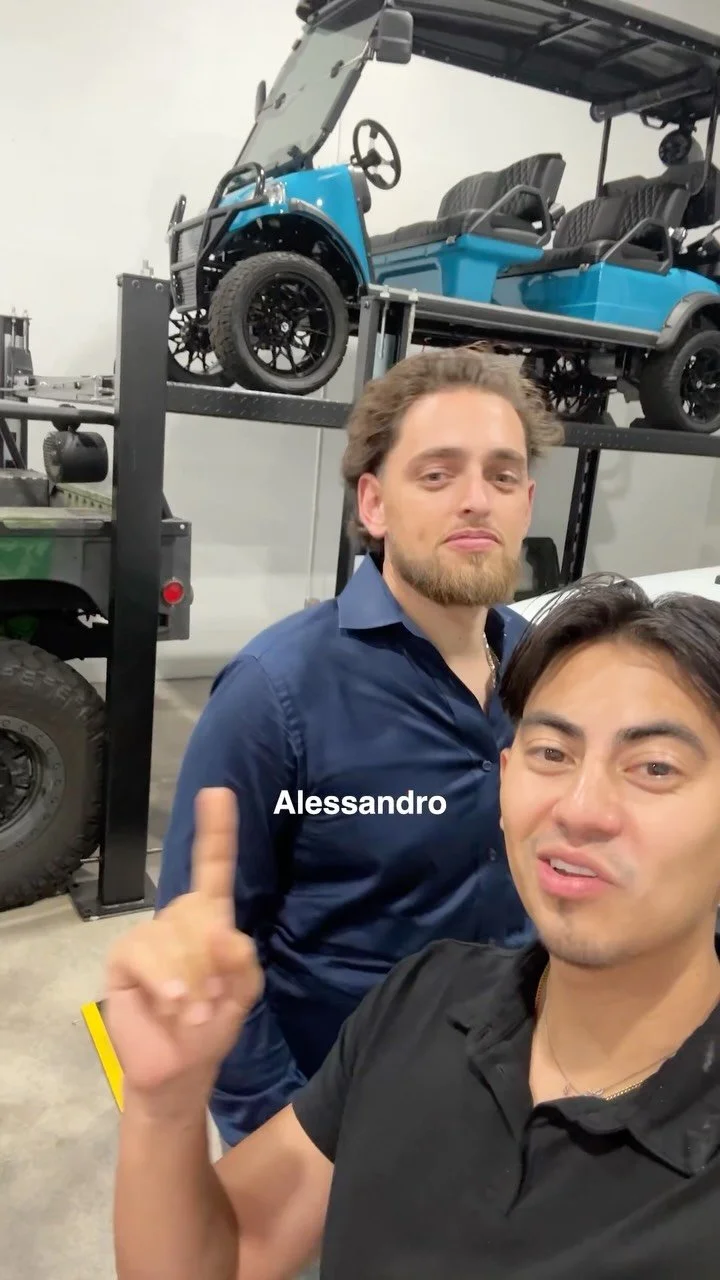
How to Get More Leads for a Service Business in Miami
Practical lead-generation strategies for Miami service businesses, including local search, reviews, referrals, strategic video, advertising, and faster follow-up.
Getting more leads for a service business is rarely about finding one secret platform or posting more often. The strongest local lead-generation systems make the business easy to discover, easy to trust, and easy to contact.
For a Miami contractor, remodeler, roofer, plumber, HVAC company, electrician, realtor, or property-service business, that usually means improving several connected parts of the customer journey: local search visibility, reviews, referrals, follow-up, clear offers, useful content, and targeted advertising.
This guide explains where to start, what each channel is supposed to do, and how video can help turn an unfamiliar company into one customers recognize and remember.
First, identify the real lead problem
Before spending more on marketing, determine where the current system is breaking down.
A business can have a lead problem because too few people know it exists. It can also have plenty of inquiries but lose them because the offer is unclear, responses are slow, estimates are not followed up, or prospects do not see enough proof to feel comfortable moving forward.
Ask four questions:
1. Are enough qualified local customers discovering the business?
2. Do those people understand the service and why it is valuable?
3. Do they see enough evidence to trust the company?
4. Is the next step obvious and easy to complete?
The right marketing plan depends on which answer is weakest.
Make your business easy to find locally
Many high-intent customers begin with Google Search or Google Maps. They may search for a service, describe a problem, or add a location such as Miami, Kendall, Doral, Coral Gables, Homestead, or Fort Lauderdale.
Start by completing and maintaining the company’s Google Business Profile. Keep the business name, phone number, hours, service area, website, and categories accurate. Add current photos, respond to reviews, and make sure the website clearly explains the services and locations covered.
Google says local results are primarily influenced by relevance, distance, and prominence. Complete business information helps with relevance, while reviews, links, and how well-known the business is can contribute to prominence.
Local visibility will not come from changing one setting. It grows when the information customers find across the web consistently supports the same business, services, and location.
Build a reliable review process
Reviews reduce uncertainty. A prospect cannot personally inspect years of experience before requesting an estimate, so they look for evidence from people who have already hired the company.
Do not wait and hope satisfied customers remember to leave a review. Create a simple process:
- Ask shortly after a successful service or completed project.
- Send the direct review link by text or email.
- Explain that an honest review helps other local customers make a decision.
- Respond professionally to both positive and negative feedback.
- Never purchase reviews or tell customers what rating to leave.
The strongest reviews often mention the service performed, communication, professionalism, and result. Those details are more persuasive than a large collection of vague comments.
Stop treating referrals as the entire strategy
Referrals are valuable because trust transfers from one person to another. The limitation is that the business cannot fully control when someone makes a recommendation or how consistently referrals arrive.
A better system supports referrals instead of replacing them. When a referred prospect looks up the company, they should find a professional website, recent work, helpful explanations, strong reviews, and a clear way to contact the team.
Marketing gives the referral somewhere credible to land. It also allows the business to reach people outside its current customer network.
Create an offer customers can understand quickly
“Contact us for more information” is not always enough. A strong offer tells the customer who it is for, what problem it addresses, and what happens next.
Depending on the business, the next step might be:
- Request a project estimate.
- Schedule an on-site assessment.
- Book a consultation.
- Send photos for an initial evaluation.
- Call for same-day availability.
- Request a property or service review.
Avoid promising outcomes the company cannot guarantee. The goal is clarity, not hype.
Show the proof customers need before they call
Service businesses often have excellent proof available every day but fail to document it.
Useful proof can include:
- Before-and-after results
- The team preparing and completing a job
- Details that demonstrate craftsmanship
- A customer describing the experience
- The owner answering a common buying question
- A walkthrough of the process
- Examples of problems the company solved
- The standards used for safety, communication, or cleanup
This is where video becomes especially useful. Customers can see the people, process, and quality behind the service instead of relying only on a claim that the company is professional.
The business does not need to look like an influencer account. It needs to look credible, capable, and familiar.
Use video to build familiarity before the buying moment
Most potential customers are not ready to hire the first time they see a business. They may not need a roofer, remodeler, commercial service, or real-estate professional today.
Consistent video helps the company become recognizable before that need appears. When the customer finally has a problem, the business is no longer completely unfamiliar.
A practical video system uses different content for different stages:
Awareness videos
Introduce the business to the right local audience. Address a recognizable problem and make the service area clear.
Trust videos
Show real work, explain the process, introduce the team, answer questions, and demonstrate the standards behind the result.
Offer videos
Invite an interested prospect to request an estimate, send a message, schedule a call, or take another specific next step.
One video rarely performs every job equally well. A connected sequence is stronger than a collection of unrelated posts.
Put the content in front of the right people
Organic posting is useful, but it mainly reaches existing followers and whoever the platform chooses to distribute the post to. A local service business may need a more deliberate way to reach qualified people in its actual market.
Targeted Instagram and Facebook advertising can distribute selected videos to people within a defined geographic area. Campaigns can also separate cold audiences from people who have already watched, engaged, or visited the business online.
The goal is not the largest possible number of views. One hundred relevant local viewers can be more valuable than thousands of viewers who live outside the service area or cannot become customers.
Advertising still depends on the message, offer, audience, budget, landing experience, and follow-up. It should be treated as a system to test and improve—not a button that guarantees leads.
Respond to inquiries while interest is high
Marketing can create an opportunity, but the business still has to convert it.
Decide who is responsible for new inquiries and how they will be tracked. Use a consistent response process across phone calls, contact forms, Instagram messages, and text messages.
The first response should make it easy for the prospect to continue. Confirm what they need, ask the necessary qualifying questions, and explain the next step. If the customer is not ready, create a reasonable follow-up schedule instead of letting the conversation disappear.
Track at least:
- Where the inquiry came from
- Whether it was qualified
- Whether an estimate or appointment was booked
- Whether the prospect became a customer
- The estimated revenue connected to the lead
- Why qualified opportunities were lost
Without that information, the business may judge marketing only by views or total messages instead of actual business results.
Strengthen the channels that already work
Lead generation does not require using every marketing channel at once. Start with the channels closest to revenue and make them work together.
For many Miami service businesses, a practical foundation is:
1. An accurate Google Business Profile
2. A consistent review process
3. A website that clearly explains the service and next step
4. Real project proof
5. Strategic video content
6. Local advertising for distribution
7. Fast inquiry handling and follow-up
Each part supports the others. Reviews improve trust. Video makes the work easier to understand. Advertising creates visibility. The website provides more detail. Follow-up turns attention into appointments and jobs.
What should you do in the next 30 days?
If the business needs more leads, begin with a focused month instead of an overwhelming marketing overhaul.
Week 1: Fix the foundation
Review the Google Business Profile, website, contact information, service descriptions, offer, and inquiry process. Identify the most profitable or strategically important service to promote first.
Week 2: Collect proof
Request reviews from recent satisfied customers and document a real project. Capture the team, process, problem, solution, and finished result.
Week 3: Build the message
Create one awareness video, one trust-focused video, and one clear offer video. Make each piece specific to the customer and service area.
Week 4: Distribute and measure
Publish the content, place the strongest creative in front of a relevant local audience, and track qualified conversations—not just views.
Use the results to decide what to improve next. Better lead generation usually comes from repeated refinement, not a single campaign.
Frequently asked questions
What is the fastest way for a local service business to get more leads?
The fastest responsible approach depends on the business. Companies with a strong offer and follow-up process may generate opportunities quickly through targeted advertising. Businesses with weak reviews, unclear positioning, or slow inquiry handling should repair those foundations first.
Does video marketing work for contractors and service businesses?
Video can be effective because it shows the people, process, and proof behind a service. Results still depend on the message, distribution, offer, targeting, and sales follow-up. Video is a tool within the lead-generation system, not a guarantee by itself.
Do I need thousands of social-media followers?
No. A local business needs relevant attention more than a large general audience. Strategic advertising can reach potential customers beyond the current follower base.
Should I focus on Google or social media?
They serve different parts of the customer journey. Google often captures existing demand from people actively searching. Social content and advertising can build familiarity and trust before the customer searches. Many businesses benefit from using both.
How much should a service business spend on marketing?
The appropriate budget depends on revenue, margins, customer value, capacity, market competition, and the channels being used. Separate the cost of strategy and content production from the advertising budget paid to the platform, then measure results against qualified opportunities and revenue.
Become easier to discover, trust, and hire
More leads do not come from being everywhere. They come from building a clear system that puts credible proof in front of the right local customers and gives them an easy next step.
Current Strategy helps established Miami and South Florida service businesses turn their real work into strategic video content and targeted advertising designed to build visibility, familiarity, and qualified customer conversations.
Explore Current Strategy: https://www.currentstrategy.co/
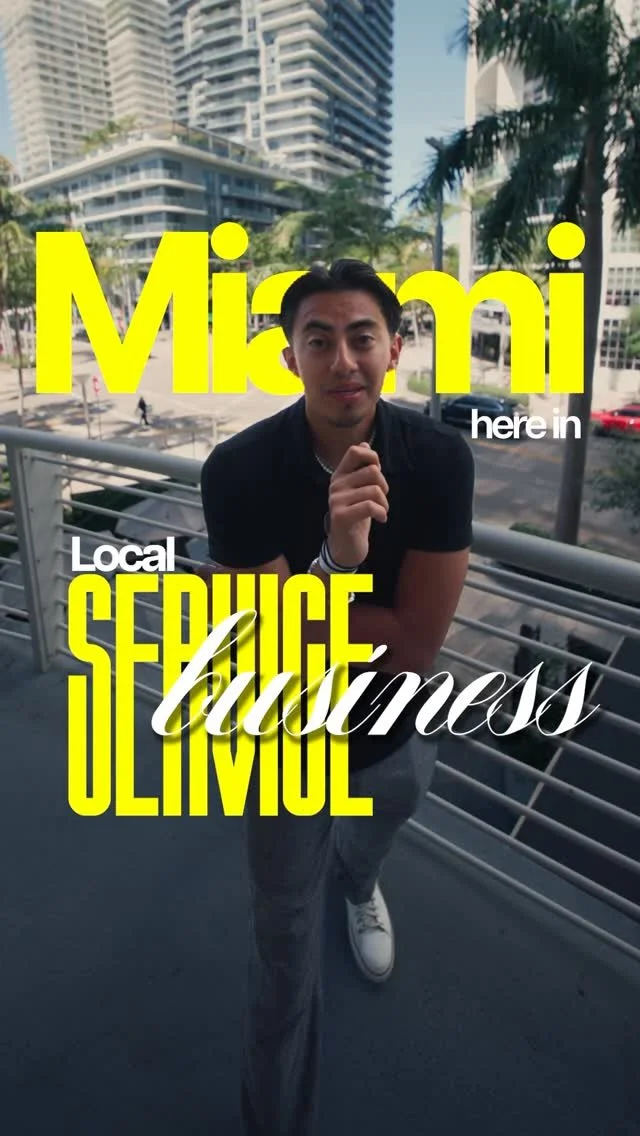
Video Marketing for Miami Service Businesses: A Practical Guide to Getting More Leads
A practical guide for Miami contractors and service businesses using strategic video content and local advertising to build trust and generate qualified customer conversations.
Video marketing can help a Miami service business generate more leads when it does three jobs well: introduces the company to the right local audience, shows credible proof of its work, and gives interested prospects a clear next step.
The goal is not to post constantly or chase viral views. It is to become familiar and trustworthy enough that your business comes to mind when a nearby customer needs your service.
This guide explains how contractors, property-service companies, home-service businesses, and other local operators can build that kind of system.
Why good service businesses still struggle to get attention
Customers cannot hire a business they do not know exists.
Many established companies do excellent work but rely mainly on referrals. Meanwhile, a competitor with more consistent marketing appears repeatedly on Instagram and Facebook. By the time a customer needs help, that competitor already feels familiar.
Video gives local businesses a way to demonstrate the people, process, and quality behind the service. Targeted advertising then puts that proof in front of potential customers within the actual service area.
Start with the customer journey, not the camera
Before deciding what to film, identify what a prospect needs to believe before contacting you.
Most local customers move through a simple sequence:
1. Awareness: “I have seen this company before.”
2. Understanding: “I know what they do and whether it applies to me.”
3. Trust: “Their work looks professional, and they seem credible.”
4. Action: “I have a reason to contact them now.”
A single video rarely handles every stage equally well. A stronger system uses different videos for different jobs.
The three-stage video marketing system
Stage 1: Get known
The first video introduces the business with a clear local angle. It should make the right viewer understand who you help, what problem you solve, and where you work.
For example, a Miami remodeling company might explain why homeowners struggle to evaluate contractors before a project begins. A pest-control company might address a seasonal local problem. A commercial real-estate professional might explain what property owners commonly overlook.
The objective is not necessarily an immediate sale. It is relevant attention.
Stage 2: Show the work
Prospects want evidence. Service businesses have an advantage because useful proof is often already happening every day:
- The team arriving and preparing a job site
- The process behind a high-quality result
- Before-and-after transformations
- Details that distinguish professional work
- A customer describing the experience
- The owner answering a common question
This content helps customers understand why the service has value. Instead of claiming that the company does excellent work, the video lets people see it.
Stage 3: Make a clear offer
After someone has watched, engaged, followed, or visited the profile, a direct-response video can invite the next step. The offer should be specific and easy to understand: request an estimate, book an appointment, message the business, or schedule a consultation.
This stage works differently from advertising to a completely cold audience. The viewer may already recognize the business and understand what it does.
What should a Miami service business film?
Start with material that answers real buying questions.
An About Us video
Introduce the owner or team, explain whom the business serves, and give customers a reason to care. Keep it concrete; a clear explanation of your standards and approach is stronger than a list of generic values.
A process or “show the work” video
Document a real service day. Capture the preparation, craftsmanship, equipment, communication, safety, cleanup, and finished result. The details customers cannot normally see are often the most persuasive.
A customer story
Use a real project to explain the customer’s problem, what your team did, and how the situation changed. Only use numbers or outcomes that the customer has approved and that you can substantiate.
An educational video
Answer a question that customers repeatedly ask before buying. Useful education demonstrates expertise while also helping prospects make a better decision.
A direct offer video
State who the offer is for, what is included, why it is timely, and what action the viewer should take. One strong call to action is usually clearer than several competing options.
Organic posting or paid advertising?
Organic content helps current followers understand the business and gives prospects something credible to review when they visit the profile. Paid advertising expands distribution beyond the existing audience and can focus attention on selected local customers.
The two work best together. Advertising can introduce the business, while a well-built profile provides additional proof when someone investigates.
That is why Current Strategy’s Instagram Authority Builder includes three pinned trust videos in addition to the campaign. The advertisement earns attention; the profile helps earn confidence.
Local targeting matters more than random reach
A Miami service business does not need every viewer on the internet. It needs the right people within a practical service area.
Campaign planning should consider:
- The neighborhoods or counties the business actually serves
- Whether the buyer is a homeowner, property manager, business owner, or another decision-maker
- The service’s buying cycle and urgency
- The value of a qualified job
- Whether the business can respond quickly to inquiries
A smaller relevant audience can be more commercially valuable than thousands of views from people who cannot become customers.
What happens during the first 30 days?
Current Strategy’s starting process is structured around four phases:
1. Week 1 — Strategy, filming, and editing: Plan and produce the Awareness Reel, Show the Work Reel, and DM Offer Reel.
2. Week 2 — Campaign launch: Build the audience, set up the sequence, and launch the advertisements.
3. Weeks 2–3 — Early response: Monitor engagement and the movement from attention into messages, estimates, or appointments.
4. Week 4 — Review and optimize: Evaluate what is working and decide which creative, hooks, or offers to test next.
Results depend on the offer, market, budget, creative, follow-up, and many other factors. No honest marketer should promise a fixed number of leads for every business.
How to tell whether the strategy is working
Views alone do not tell the whole story. Track indicators connected to actual business outcomes:
- Qualified messages and calls
- Estimate or consultation requests
- Appointments booked
- Cost per qualified conversation
- Conversion from inquiry to customer
- Revenue connected to the campaign
- Which creative and offers produce meaningful responses
The business also needs a reliable follow-up process. Marketing can create an opportunity, but slow or inconsistent responses can still lose the customer.
Common mistakes to avoid
Posting without a purpose
Every video should have a defined audience and job. “We need to post something” is not a strategy.
Talking only about the company
Connect the business’s experience to the customer’s problem. Viewers care about credentials when those credentials help them make a safer or better choice.
Hiding the real work
Polished footage is useful, but customers also want genuine evidence. Show the team, process, projects, and decisions that create the finished result.
Expecting one video to work forever
Offers, audiences, and creative performance change. Strong campaigns generate information that should shape the next round of content.
Ignoring inquiry handling
Decide who answers messages, how quickly they respond, what questions they ask, and how leads are tracked before the campaign starts.
A practical starting point
If your business already produces good work and can serve more customers, begin with three connected videos rather than a large batch of unrelated posts:
- One video to get known
- One video to demonstrate trust and quality
- One video to start a customer conversation
Then use the initial campaign data to decide what to film next.
Current Strategy plans, films, edits, launches, and manages this process for established service businesses in Miami and South Florida.
Book a free strategy call (https://calendly.com/contact-benjicurrentstrategy/30min) to discuss your service, target customer, and growth goals.
Frequently asked questions
How often should a local business post videos?
Consistency matters, but quality and purpose matter more than an arbitrary daily schedule. A smaller number of useful videos, supported by deliberate distribution, can be more effective than frequent generic posts.
Do I need to appear on camera?
Not in every video. However, showing the owner or team can help customers connect a real person to the business. Process footage, customer stories, voiceovers, and project documentation can support the rest of the strategy.
Should I boost Instagram posts?
A structured Meta advertising campaign usually provides more control over audience, objectives, creative testing, and retargeting than simply boosting a post. The best setup depends on the business and campaign goal.
Can video marketing guarantee leads?
No strategy can honestly guarantee the same number of leads for every business. Outcomes depend on the market, offer, targeting, creative, budget, competition, and sales follow-up.